How to Source an ERW Tube Mill Supplier in Mexico and Latin America
Sourcing an ERW tube mill supplier in Mexico or Latin America is not the same as purchasing standard industrial machinery off a catalog. You are making a capital commitment with a 15 to 25 year operational lifespan, and every decision you make during the evaluation process — from the mill type you specify to the commissioning terms you negotiate — will shape your production output, your maintenance costs, and your competitive position for decades.
We work with buyers across Mexico, Brazil, Colombia, Chile, and the wider Latin American region, and the questions we hear most often from procurement managers are the same ones that get answered too late. What type of mill do I actually need? Which standards apply to my end market? How do I know if I am dealing with a real manufacturer or a trading company reselling someone else’s equipment? What should commissioning look like, and who is responsible if the mill doesn’t perform?
This guide answers all of those questions in detail. If you are in the early stages of evaluating ERW tube mill suppliers for a Latin American installation, read it before you send your first RFQ.
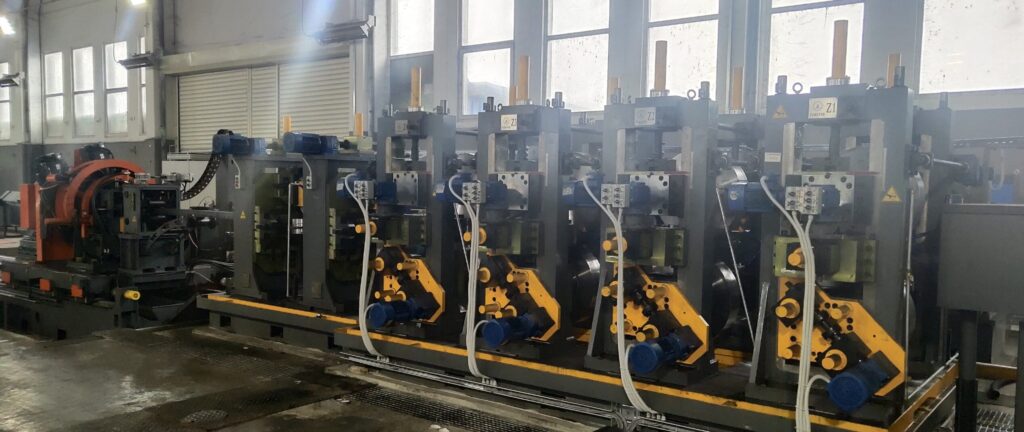
Why Latin America’s ERW Tube Mill Market Is Growing
The demand for ERW tube mill equipment across Latin America is not a short-term spike driven by a single project cycle. It is the product of several structural shifts happening simultaneously, and buyers who understand those shifts make better mill specification decisions because they are buying for where the market is going, not just where it is today.
Mexico’s nearshoring boom is the most consequential industrial story in the Western Hemisphere right now. Supply chain realignment away from Asia has driven billions of dollars of new manufacturing investment into Nuevo León, Coahuila, Chihuahua, and Baja California over the past three years. Automotive, electronics, aerospace, medical devices, and heavy industrial sectors are all expanding Mexican production capacity at scale. Every new assembly plant and industrial complex requires structural steel tube — for frames, supports, conveyors, racking, and mechanical infrastructure — and domestic tube production capacity is running behind that demand.
Brazil operates at a different scale with its own distinct dynamics. Latin America’s largest economy produces approximately 35 million tonnes of crude steel annually and has a well-established domestic tube manufacturing industry that serves construction, oil and gas infrastructure, agricultural equipment, and automotive supply chains. The Brazilian market for tube mill equipment is sophisticated and price-competitive, with procurement managers who have real experience evaluating international suppliers. Buyers here are looking for evidence of engineering depth and after-sales substance, not just price competitiveness.
Colombia is expanding energy and mining infrastructure across its interior, including oil and gas pipeline networks and mining operations in the Andean region. Chile, the world’s largest copper producer, has sustained infrastructure investment needs tied directly to its mining economy. Peru is building industrial capacity to support its growing export economy. Across all of these markets, the common thread is the same: ERW tube is a fundamental industrial input, domestic production capacity is strategically important, and the equipment needed to produce it is in active, growing demand.
Getting the Mill Type Right Before You Approach Any Supplier
The most expensive mistake Latin American buyers make when sourcing ERW tube mill equipment is approaching suppliers before locking down the correct mill type for their application. We see this regularly: a buyer sends a general inquiry, receives quotes on three different configurations, and spends months in clarification rounds that a few hours of upfront specification work would have eliminated entirely.
Here is how we categorize the major mill types and what each one is actually designed to do:

High-Speed ERW Tube Mills
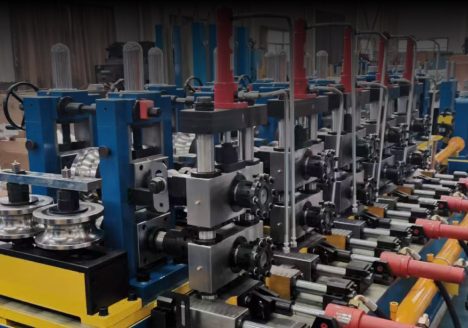
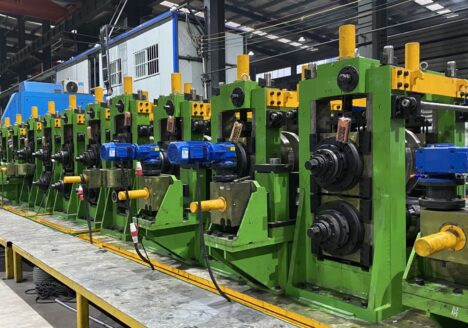
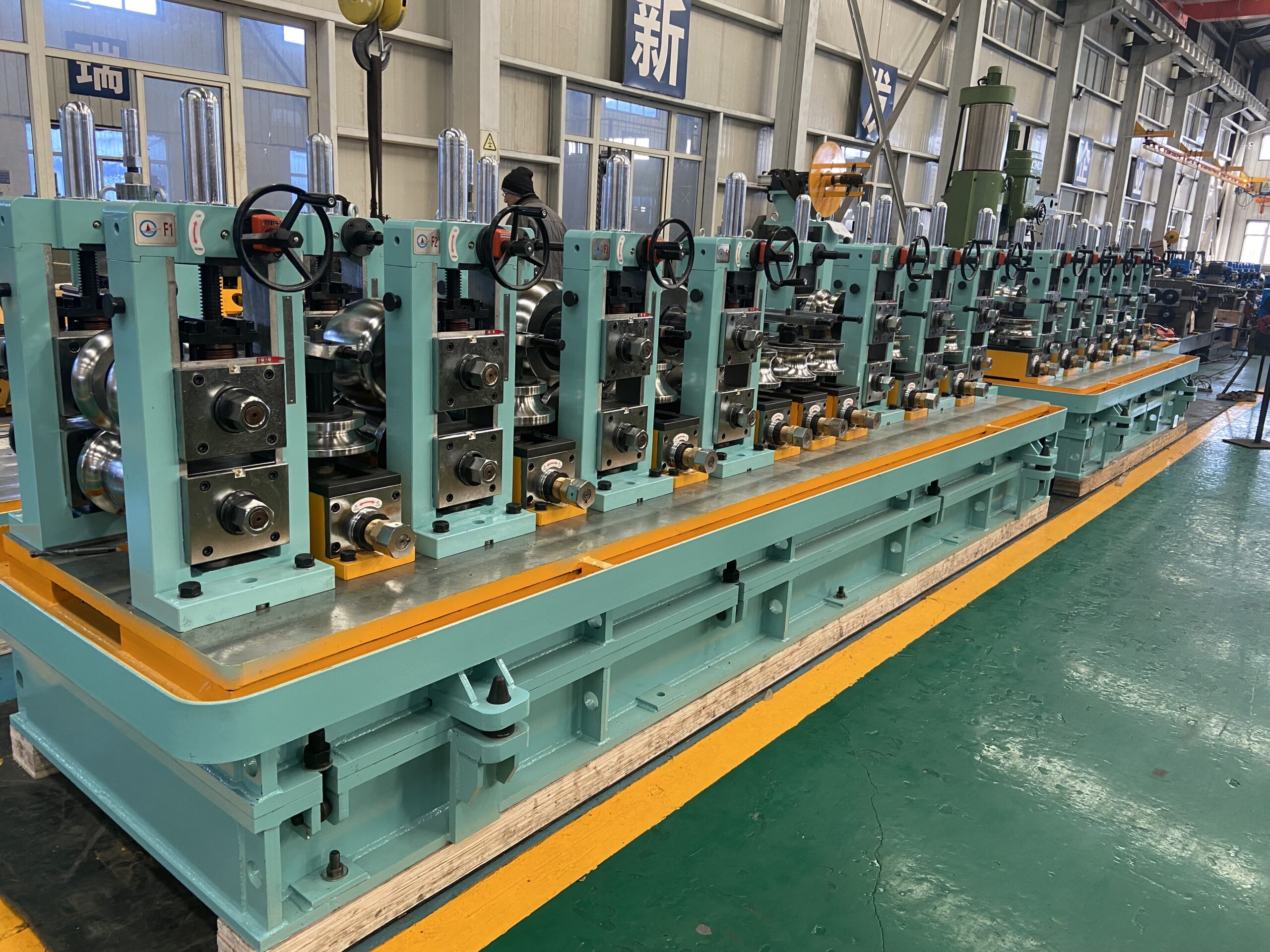
Our high-speed ERW tube mill range covers the majority of production requirements for buyers targeting the construction, general industrial, and structural hollow section markets. These mills are designed for continuous, high-throughput production of round, square, and rectangular tube in carbon steel and light alloy grades.
The range starts at our ERW32 — a 32mm OD mill suited to furniture, racking, and light-gauge industrial tube — and runs through the ERW38, ERW60, and ERW76 for progressively larger small-diameter applications. The ERW89, ERW114, and ERW168 sit in the mid-range that serves the bulk of Latin American construction and structural demand. For large-diameter structural, piling, and heavy infrastructure applications, we supply the ERW219, ERW325, ERW508, and ERW630.
When evaluating which size to specify, the critical inputs are your target OD range, your wall thickness requirements at that OD, and your target production speed. A mill undersized for your wall thickness requirements will either underperform on speed or produce inconsistent weld quality at the edge of its capability envelope. Specify this correctly before you send a single RFQ.
Precision Tube Mills
Our precision tube mill is designed for applications where dimensional accuracy and surface finish are the primary performance requirements rather than throughput. Automotive component supply chains are the most common application — seat frames, exhaust systems, roll cages, structural body components — but the precision mill also serves hydraulic tube, medical device manufacturing, and high-end furniture production where tight OD and wall thickness tolerances are specified by the end customer.
Small OD Heavy Gauge
Our small OD heavy gauge mill addresses a specific production requirement that falls outside the standard high-speed range: small outside diameter tube with wall thickness that exceeds what a standard mill of that size can handle. Applications include hydraulic cylinder tubing, structural connectors, and mechanical components where the wall-to-OD ratio is high relative to standard tube mill norms. If your production requirements push into this territory, this is the correct specification.
Quick Change Technology
For operations running multiple tube profiles or OD sizes on the same mill line, our quick change technology reduces changeover time significantly compared to conventional roll change procedures. In a multi-product operation where changeover time competes directly with production time, the efficiency gain from quick change capability translates directly to improved equipment effectiveness and profitability.
Direct Forming Technology
Our Direct Forming Line uses a fundamentally different approach to producing square and rectangular hollow sections compared to a conventional ERW tube mill. Where a standard mill first forms round tube and then reforms it through a sizing section to produce square and rectangular profiles, the Direct Forming Line takes flat strip and forms it directly into the finished hollow section shape in a single continuous pass. This eliminates the intermediate round-forming stage entirely.
The practical advantage for buyers is significant. By bypassing the round-forming step, the Direct Forming Line reduces the total number of roll passes required, lowers the energy input per tonne of finished product, and reduces tooling complexity and wear. The result is a lower cost per tonne of finished hollow section compared to a conventional round-to-square tube mill setup, particularly for operations where square and rectangular hollow sections represent the majority of production volume.
We supply Direct Forming Lines covering a range of hollow section sizes from 120×120mm up to 600×600mm, with wall thickness capability matched to each size range. For buyers in Mexico and Latin America whose primary product is structural hollow sections for construction and infrastructure applications — rather than round tube — the Direct Forming Line is frequently a more economical investment than a high-speed ERW tube mill with a reforming section. It is worth discussing your specific product mix with our technical team before committing to either configuration.
Flexible Forming Technology
Our Flexible Forming Line, built around our proprietary Flexible Forming Excellent (FFX) technology, addresses one of the persistent operational challenges in tube and hollow section production: the time and cost associated with changing over between different profiles on the same mill. Conventional roll forming requires a complete roll set change when switching between profiles — a process that can take several hours and involves significant tooling handling and adjustment work.
FFX technology achieves profile changes through adjustable forming tooling that can be reconfigured for a different profile in a fraction of the time required for a conventional roll change. For operations running a diverse product mix — multiple round ODs, a range of square and rectangular hollow sections, or bespoke profiles for specific customer applications — the FFX Flexible Forming Line substantially improves overall equipment effectiveness by reducing changeover downtime.
For Latin American buyers evaluating tube mill configurations, the Flexible Forming Line is particularly relevant to operations serving markets with fragmented product demand — where a single customer might specify multiple profile types, or where the product mix shifts seasonally between construction and industrial applications. Rather than investing in multiple dedicated mills or accepting the efficiency penalty of frequent conventional changeovers, FFX technology allows a single line to serve a broad product range without compromising on throughput per profile.
Regional Standards Every Latin American Buyer Needs to Know
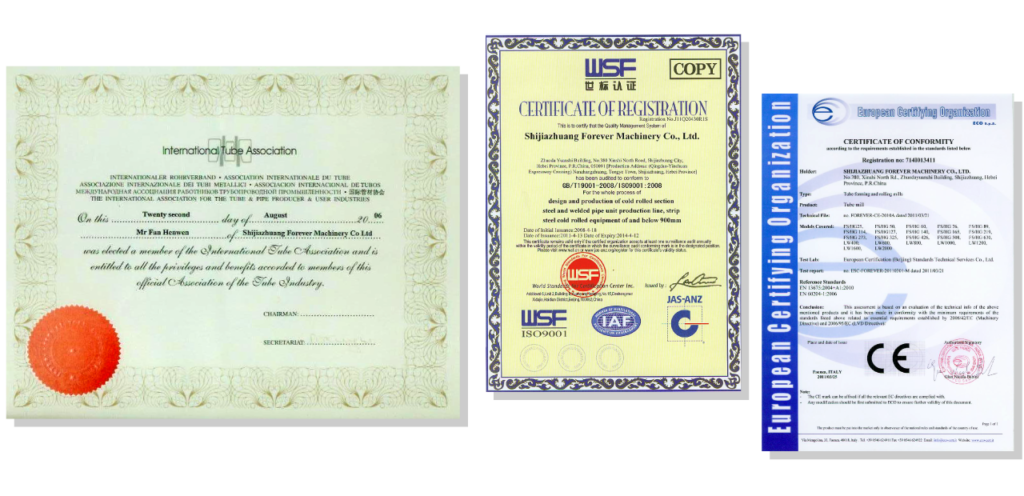
One of the fastest ways to disqualify a supplier is to ask about the standards requirements for your specific market and watch how they respond. A supplier with genuine engineering experience in Latin America will answer with specifics. A reseller or a supplier with no real regional experience will deflect or generalize. Here are the standards that matter most:
- ASTM A53 is the primary standard for welded and seamless steel pipe in pressure and mechanical applications across most of Latin America, covering Grade A and Grade B product. Grade B is the more common structural and pipeline specification. Any high-speed ERW tube mill we supply for the general industrial and construction markets in Mexico, Colombia, and Peru produces to ASTM A53. Ask your supplier for documented evidence — mill test certificates and mechanical test reports, not marketing assurances.
- ASTM A500 covers cold-formed welded structural tubing — the square and rectangular hollow sections used extensively in construction and infrastructure. This is the standard you will encounter most frequently in construction and civil engineering specifications across the region. Our mid-range mills, the ERW89, ERW114, and ERW168 in particular, produce structural hollow sections to ASTM A500 Grade B and Grade C at competitive wall thickness ranges.
- NMX-B-214 is Mexico’s national standard for electrically welded steel tubes. Mexican domestic supply compliance often requires NMX documentation in addition to or alongside ASTM references, particularly for government and infrastructure procurement. We work with Mexican buyers to ensure the correct documentation package is in place for domestic procurement requirements.
- ABNT NBR 6591 and NBR 6594 govern structural and mechanical tube respectively in the Brazilian market. Any supplier targeting Brazil who is not familiar with the ABNT standard framework is not a credible partner for Brazilian operations. Brazilian procurement managers will ask about this, and a supplier who cannot answer specifically has already disqualified themselves.
- API 5L governs line pipe for oil and gas applications: Mexico’s Pemex supply chain, Colombia’s pipeline infrastructure, and Brazilian onshore and offshore pipeline. Producing to API 5L requires a mill engineered for that specification — our dedicated API tube mill, not a high-speed mill with an API label.
How to Evaluate Suppliers: The Questions That Separate Manufacturers from Resellers
Are You Actually a Manufacturer?
This is the single most important question in the evaluation process and it has a direct, specific answer. We design and manufacture our forming rolls, tooling, and mill sections in our own facilities. We can provide engineering drawings. We welcome facility visits. We can show you the machines that make the machines.
The Latin American market for ERW tube mill equipment has a significant number of trading companies who present themselves as manufacturers but are in fact reselling equipment they had no part in designing or building. When something goes wrong with your mill — and in 15 to 25 years of operation, something will — a trading company has no engineering depth to help you. They cannot modify your tooling design, solve a novel forming problem, or produce a custom replacement component. They relay your issue to a factory in another country and you wait.
Ask directly. Push for specifics. Visit the facility if you can. A real manufacturer answers without hesitation.
How Are the Forming Rolls Designed and Manufactured?
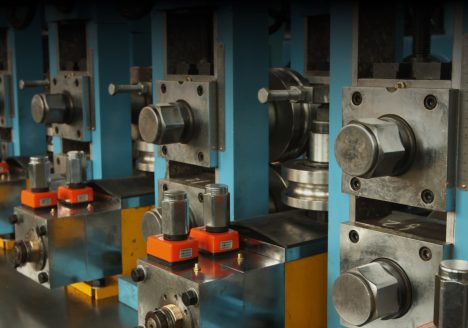
The forming rolls are the precision component that determines the quality of everything your mill produces. The OD tolerance, wall thickness consistency, weld seam quality, and surface finish of your finished tube are all a direct function of how well the rolls are designed for your specific product range and how precisely they are manufactured.
Ask specifically: What material are the rolls made from? What hardness specification do you work to and why? How do you design roll profiles for a new tube specification? What is the expected roll life under continuous two-shift production? Can rolls be reground locally in-region or does it require shipment back to the factory? Suppliers with genuine engineering capability give you specific, technical answers with numbers attached. Suppliers without it give you marketing language about quality and experience.
What Does After-Sales Support Actually Look Like in Latin America?
Not “we have regional partners” — specifically where? Who? What is the committed response time to a critical fault that has stopped your production? Where are spare parts physically stocked? What is the lead time for replacement rolls, and can they be sourced from in-region stock or only from the factory?
We address this through our spare parts and services program, and our commissioning team works with your maintenance staff during startup to ensure they understand the mill deeply enough to handle routine maintenance without escalating to us for every issue. A mill running at 60 percent capacity for two months because you are waiting for a component from overseas does not just cost the price of that part. It costs two months of lost production. Calculate that number for your operation before you use headline capital cost as your primary evaluation criterion.
Can You Provide Reference Installations in Latin America?
Ask for specific installations — plant name, country, application, mill specification, production outcome. A supplier with genuine regional experience will provide this information and invite direct contact with those customers. A supplier without regional experience will give you vague references to customers in the Americas or redirect you to installations in markets with fundamentally different industrial contexts.
What Does Commissioning Include and Who Bears the Risk?
ERW tube mill commissioning is a specialist activity involving setting up the forming section for your specific product range, calibrating the weld box for your material and wall thickness, setting the sizing and straightening sections to your dimensional tolerances, and running qualification tests across your full product range. Confirm: Is commissioning included in the contract price? Who provides it — the manufacturer’s own engineers or a third party? How long does the commissioning period cover? What are the acceptance criteria and how are they tested? What happens if the mill does not reach acceptance criteria during the scheduled commissioning period? Get every answer in writing before you sign anything.
Complementary Equipment Worth Evaluating at the Same Time
Most Latin American tube mill installations are part of a broader steel processing operation. Sourcing complementary equipment from us alongside your ERW tube mill simplifies commissioning, eliminates interface risk between equipment from different suppliers, and gives you a single point of accountability for your entire production line performance.
Our direct forming lines for hollow sections produce square and rectangular hollow sections directly from strip, bypassing the round-to-square reforming step and reducing tooling changeover complexity for operations focused on structural hollow section production. Our flexible forming line is designed for operations that need to switch between multiple profiles without long changeover times — particularly relevant for producers serving diverse market segments with varying dimensional requirements.
For operations with profile requirements beyond standard round, square, and rectangular tube, our profile forming line range covers both open profile section forming and closed profile section forming for architectural, structural, and specialized industrial applications.
If you are processing your own coil rather than purchasing pre-slit strip — which most serious tube producers eventually do, as in-house slitting eliminates dependence on external slit coil suppliers and reduces strip cost per tonne — our slitting and cut-to-length line range provides in-house coil preparation capability. Options run from the compact 2×1300 slitting line for smaller operations through to the 16×2200 slitting line for high-volume wide-coil processing.
How to Structure Your Supplier Inquiry
A complete, well-structured RFQ produces comparable responses and filters out incapable suppliers quickly. Send us the following and we can provide a detailed specification and indicative pricing within five business days:
- Production requirements: target OD range and the specific ODs you plan to run most, wall thickness range at those ODs, material grade, target production speed in meters per minute, planned shift pattern.
- Standards compliance: the specific standards your end market requires — ASTM A53, ASTM A500, API 5L, NMX, ABNT NBR, or other. If you are not certain which applies, tell us the application and end market and we will advise.
- Site details: country and state, electrical supply specification, floor space dimensions, overhead crane capacity, any other site constraints.
- Timeline: your required delivery and commissioning completion date.
Send your inquiry through our contact page. We respond to all production-specific inquiries within two business days, and our technical team is available to discuss specification questions before you formalize your RFQ.
The Bottom Line
The Latin American market for ERW tube mill equipment is active, growing, and increasingly sophisticated. Buyers who do their specification work upfront, who ask the right questions about engineering capability and after-sales support, and who evaluate total cost of ownership rather than upfront capital cost alone make better decisions — and operate better mills over the life of their investment.
We have been supplying tube mills to the LATAM region and understand the specific requirements of Mexican, Brazilian, and Colombian buyers in terms of standards compliance, commissioning support, and ongoing service. If you are in the market for an ERW tube mill supplier in Latin America, we would be glad to walk through your requirements and help you arrive at the right specification before you commit to any purchase. Contact us at frvtubemill.com.au/contact-us and a member of our technical team will be in touch within two business days.